Wood Grain Backgrounds: A Design Asset for Every Project
You know the feeling. You're working on a new design, and you need that perfect background texture. Something that feels grounded, natural, and warm without overwhelming your content. That's where a high-quality Digital Paper Wood Grain Backgrounds set becomes an essential part of your creative toolkit. It's not just a pattern; it's a foundation that can set the entire mood for your project.
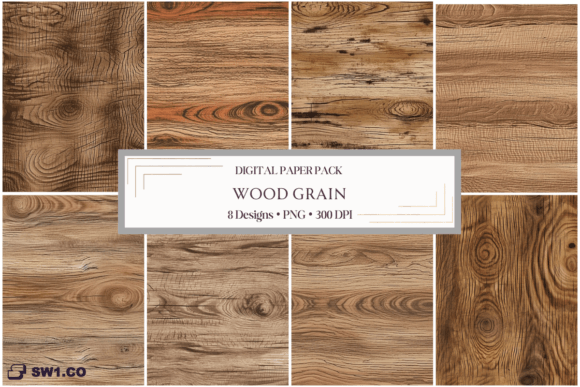
This particular collection offers eight distinct wood grain textures. Each file is a 12x12 inch PNG at 300 DPI, which means you get crisp, detailed prints and clear digital displays. The grain patterns range from tight, subtle lines to more pronounced, rustic textures. Some feel like smooth, finished oak, while others have the character of reclaimed barn wood. The color palette leans towards natural browns, grays, and warm tans, making them incredibly versatile for layering with other design elements.
Where Wood Grain Textures Make an Impact
Think about the projects where you want to evoke a sense of authenticity, craftsmanship, or rustic charm. These wood grain backgrounds shine in packaging design for artisanal goods, craft beverages, or organic products. They provide an instant sense of quality and care. For social media graphics, they create a warm, engaging backdrop for quotes, promotions, or announcements that stops the scroll with its tactile appeal.
In editorial design and web design, a subtle wood grain can add depth to a section header or a sidebar without distracting from the main text. It works beautifully as a background for text-based designs in tools like Canva or Adobe Spark. Entrepreneurs and small business owners can use these textures in their brand identity for logos, business cards, or website hero images to communicate a down-to-earth, reliable personality. The applications extend to wedding invitations, menu designs, blog headers, and even as a texture overlay for digital art.
Integrating Texture with Your Typography
The real power of a background texture is how it interacts with your foreground content. A busy wood grain demands careful consideration of your font pairing. A clean, modern sans serif font or a sturdy serif font often provides the best contrast, ensuring your text remains highly readable. Avoid overly ornate script fonts or handwritten fonts directly on the most textured areas, as they can become difficult to decipher.
Consider your visual hierarchy. Use the wood grain to frame your main headline or key message. You might place a solid color overlay—a semi-transparent white or black box—behind your body text to guarantee legibility while still allowing the beautiful texture to peek through around the edges. This approach lets you leverage the aesthetic of the digital paper without sacrificing the clarity of your message. It’s a practical technique that professional designers use to balance style and function.
Choosing and Using Your Files Wisely
When you download this set, you receive a ZIP file containing the eight PNGs. Remember, these are raster files, not vector SVG files. This means they are perfect for print and digital use at their given resolution but cannot be infinitely scaled or used with cutting machines that require layered vectors. For sublimation printing or high-resolution print projects, the 300 DPI specification is exactly what you need for sharp results.
Before committing to a background for a major project, test it. Place your logo, text, and other design assets on top. Check the contrast and readability at the size it will be viewed. Does the grain pattern compete with your call-to-action? Does the color temperature of the wood complement your brand's color palette? This hands-on evaluation is a critical step in the design process. The commercial license included with your purchase allows you to use these textures in both personal and commercial projects, giving you the freedom to create without worry.
Ultimately, a well-chosen texture like a Digital Paper Wood Grain Background does more than fill space. It tells a story. It adds a layer of sophistication or warmth that flat colors cannot achieve. By understanding its strengths and integrating it thoughtfully with your typography and layout, you transform a simple background into a powerful component of your visual communication. It’s a versatile asset that deserves a spot in every creative’s library.