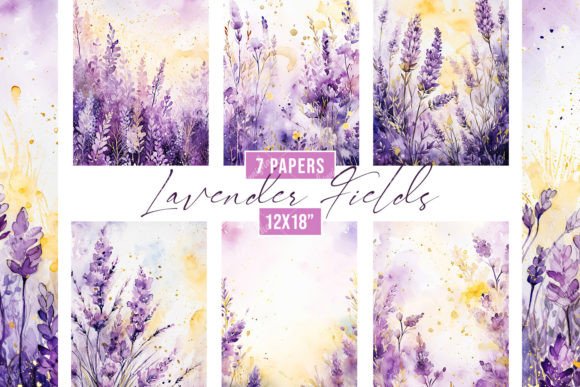
Watercolor Lavender Field Backgrounds: Soft Focus for Creative Projects
There’s a specific quality to a watercolor wash that digital filters struggle to replicate. It’s in the uneven texture of the pigment, the way colors bleed into one another with a soft, organic edge. When that artistic technique is applied to a subject as timeless as a lavender field, the result is a background that feels both serene and deeply expressive. These aren’t just flat, static images; they carry the subtle imperfections and gentle gradients of a hand-painted piece. The visual personality is one of calm sophistication, romantic nostalgia, and natural elegance. The style avoids harsh lines and overwhelming detail, offering instead a dreamy, impressionistic view of rolling purple rows under a soft sky. This overall appeal lies in its versatility—it provides a rich, textured foundation without competing for attention, making it an ideal starting point for a multitude of creative endeavors.
Practical Applications for Designers and Crafters
The true value of any design asset is measured by its utility across different mediums. Watercolor Lavender Field Backgrounds excel precisely because of their adaptable nature. For graphic designers and brand strategists, these backgrounds offer a unique way to infuse warmth and personality into client work. They can serve as the backdrop for a website hero section, setting a welcoming tone for a wellness brand or a boutique hotel. In social media graphics, they stop the scroll with their calming beauty, perfect for quotes, announcements, or promotional posts for businesses in the beauty, lifestyle, or travel sectors. The texture adds depth to flat digital layouts, enhancing visual hierarchy without the need for complex effects.
Moving into print, the applications expand further. In editorial design and packaging, a watercolor lavender field can elevate a product from ordinary to premium. Imagine the cover of a recipe book, the sleeve of a gourmet soap, or the background of a wedding invitation suite. The soft palette and organic feel communicate care, quality, and a connection to nature. For publishers and content creators, these backgrounds are a godsend for creating eye-catching book covers, magazine layouts, or blog post featured images that require an artistic, non-generic touch. They provide a consistent, high-quality visual theme that can strengthen brand identity across multiple pieces of content.
For the crafting and hobbyist community, the possibilities are deeply personal and tactile. Scrapbookers and junk journalers can print these backgrounds to create beautiful, cohesive pages that frame memories with artistry. The 12x18 inch, 300 DPI format is ideal for creating full-page layouts or for cutting down into smaller elements like borders, photo mats, and decorative strips. Card makers can use them as the base for greeting cards, thank you notes, or party invitations, instantly setting a gentle, celebratory mood. The digital files can also be used in hybrid crafting—printed and then embellished with stitching, die-cuts, or hand-lettering to create truly one-of-a-kind pieces.
Integrating Texture into Your Design Workflow
Choosing the right background is a strategic decision. When evaluating a watercolor lavender field for a project, consider the existing color palette and typography of your design. The soft purples, greens, and blues in the background should complement, not clash with, your primary brand or project colors. This is where understanding font pairing becomes crucial. A delicate, modern serif font like Playfair Display or a clean sans-serif like Montserrat can create beautiful contrast against the organic texture, ensuring readability while maintaining elegance. For a more whimsical or romantic project, a script or handwritten font might be appropriate, but it should be used sparingly for headlines or accents to avoid visual chaos.
Testing is non-negotiable. Before committing, overlay your text, logos, or key design elements onto the background. Check the contrast in both digital and print previews. Does the text remain legible? Does the background enhance the overall message or distract from it? The high-resolution, 3600x5400 pixel size gives you ample room to zoom in and examine how the texture interacts with smaller type. You may find that placing a semi-transparent white or colored shape behind your text block helps it pop while still allowing the beautiful background to shine through. This technique is a staple in professional web design and print layout for managing complex backgrounds.
Finally, always be mindful of the commercial license that accompanies your digital assets. For entrepreneurs and small business owners using these backgrounds in client work, product packaging, or merchandise for sale, a clear commercial license is essential. It provides the legal peace of mind to use the artwork confidently in your brand identity and marketing materials. This set’s inclusion of high-resolution JPG files makes it a versatile component of your design toolkit, ready to be adapted for countless projects where a touch of natural, artistic beauty is needed to connect with your audience on an emotional level.