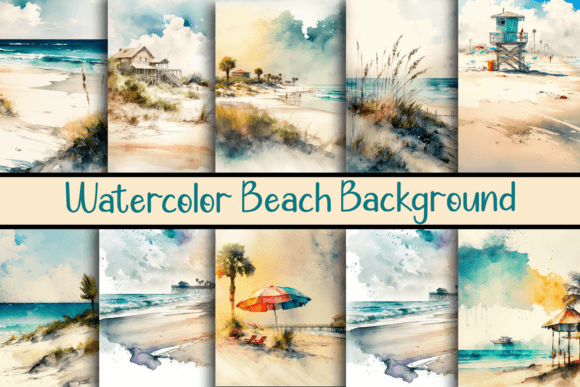
Watercolor Beach Backgrounds: Your Digital Escape to Coastal Calm
There’s a specific feeling you get when you look at a beautifully crafted watercolor painting of the ocean. It’s not just the colors—it’s the texture, the gentle bleed of pigments, the way light seems to dance on the paper. Now, imagine capturing that entire mood and applying it to your latest project. That’s the core promise of our Watercolor Beach Backgrounds. This collection isn't just a set of images; it's a toolkit for injecting a sense of serene, artistic professionalism into your work, instantly transporting your audience to a sun-drenched shoreline.
The Anatomy of a Perfect Coastal Palette
So, what exactly defines these backgrounds? Visually, they are a harmonious blend of loose, expressive brushstrokes and controlled digital precision. You’ll find the characteristic granulation of real watercolors—where pigment settles into the paper’s texture—paired with the crisp, clean lines needed for digital application. The color story is built around the classic beach palette: soft sandy beiges, translucent aquas, deep ocean blues, and the warm, hazy tones of a sunset. Each of the 12 HD PNG images in this set offers a unique composition, from soft, abstract washes that suggest water and sky to more defined barrel and wave textures. The personality is relaxed, organic, and authentically handcrafted, steering clear of sterile, over-processed digital looks.
Where This Style Truly Shines
The real power of a premium font or asset like this lies in its versatility. Let’s break down where these Watercolor Beach Backgrounds become an indispensable part of your design assets:
- For Brand Identity & Logo Design: If you’re building a brand for a coastal café, a yoga retreat, a boutique resort, or a sustainable swimwear line, these backgrounds provide an immediate emotional anchor. Use a subtle wash behind your logo design to create depth and context. The organic feel communicates authenticity and a connection to nature, which is a powerful narrative for brand identity.
- In Digital & Web Design: Website hero sections, blog post headers, and email newsletter banners often fall flat with plain colors or generic stock photos. A Watercolor Beach Background can transform a simple layout into an immersive experience. It adds visual interest without overwhelming your content, especially when used as a textured overlay or a side panel. For web design, these PNGs work beautifully behind call-to-action buttons or as section dividers.
- Across Marketing & Social Media: In the crowded space of social media graphics, stopping the scroll is key. These backgrounds are perfect for creating quote graphics, promotional announcements, and story slides that feel curated and professional. For entrepreneurs and marketers, using consistent, high-quality backgrounds like these helps build recognition and a cohesive aesthetic across platforms—a subtle but effective form of visual hierarchy.
- In Publishing & Editorial Design: Think beyond the obvious. A cookbook focused on seafood recipes, a travel magazine feature, or a poetry collection could use these as chapter title pages or marginalia. In editorial design, the background sets the tone. A soft watercolor beach wash can make a page feel more inviting and less dense, improving the reader's experience.
- For Personal Projects & Crafts: The applications here are wonderfully broad. Use them as backgrounds for digital scrapbooking, custom party invitations, desktop or phone wallpapers, or even as a base for printable art. Crafters can incorporate them into sublimation projects for mugs, tote bags, or t-shirts, adding a unique, artistic touch that generic patterns can’t match.
Making It Work: Practical Selection & Integration
Choosing the right background from the set is your first practical step. Don’t just pick the prettiest one. Consider your project’s primary color scheme. Does it lean warm (sandy, sunset tones) or cool (ocean blues, greens)? Select a background that complements, not clashes. Next, evaluate the density. A very busy, textured background might work for a large poster but could fight with text on a mobile screen. For packaging design, a more subtle, repeating pattern might be preferable to a bold, singular image.
Testing is non-negotiable. Always check readability. Place your headline and body text over the background at actual size. Does the text remain clear? If not, you have options: add a semi-transparent white or dark overlay behind the text, choose a sans serif font with good weight for the headline, or select a less detailed section of the background. Speaking of fonts, font pairing is crucial here. The organic, artistic nature of the watercolor pairs beautifully with clean, modern typefaces. Try a bold serif font for headings to create elegant contrast, or a crisp sans serif font for body copy to maintain clarity. A delicate script font can be used sparingly for accents, but avoid overly ornate handwritten fonts that might become illegible against the textured backdrop.
Finally, understand the licensing. Since these are provided as digital backgrounds for commercial font and asset use, you are typically free to use them in client projects, for sale on printed merchandise, and across your own business materials. This makes them a sound investment for freelancers and small business owners who need professional, versatile creative font and background resources without legal ambiguity.
A Final Note on Cohesion
The goal with any design element is to create a unified whole. These Watercolor Beach Backgrounds are more than just pretty pictures; they are a foundational element of modern typography and layout when used thoughtfully. They can dictate the mood, influence audience engagement, and solidify a brand’s professionalism. By selecting the right image, testing its interaction with your type, and applying it consistently, you move from simply making a design to crafting an experience. That’s the difference between a project that looks finished and one that feels truly complete.