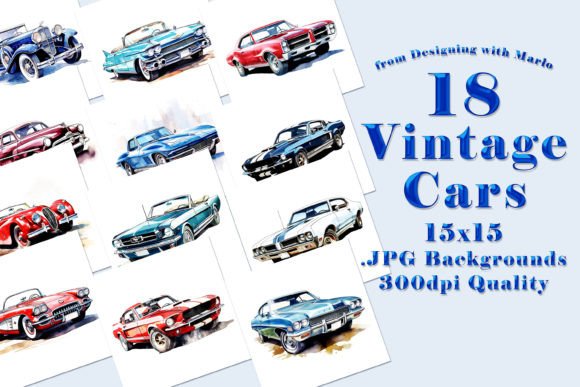
Vintage Classic Cars 15x15 Backgrounds for Digital Crafters
More Than a Texture: A Statement of Style
When you’re designing for a brand or a personal project, the background does more than fill space. It sets the entire mood. A sterile white canvas feels modern and clean. A deep, moody texture feels dramatic and serious. But what if your project calls for something with character, nostalgia, and a distinct sense of American heritage? That’s exactly where the Vintage Classic Cars 15x15 Backgrounds come in. This isn't just another set of digital papers; it's a curated collection of watercolor textures built around a specific, evocative theme.
The visual personality of these backgrounds is immediately clear. Think of the bold lines of a 1957 Chevrolet Bel Air or the sleek fins of a Cadillac, rendered not in photographic detail but in the fluid, expressive strokes of watercolor. The style balances realism with artistic impression. You get the recognizable shapes and chrome details of iconic automobiles, but the watercolor medium softens the edges and introduces organic color bleeds and subtle texture variations. The result is a background that feels handmade, authentic, and rich with a vintage Americana vibe. It’s a design asset that communicates passion for classic craftsmanship, making it ideal for projects that need a touch of retro soul.
Practical Applications for Designers and Crafters
The true value of any design asset is its versatility. The Vintage Classic Cars 15x15 Backgrounds are built at a substantial 4500x4500 pixel size at 300dpi, which opens up a wide range of professional and personal uses. For digital creators, this high resolution means crisp results even when cropping in for a detail or scaling up for a large print. The non-seamless design is intentional; each background is a complete, standalone composition, perfect for being the central visual element in a layout.
Let’s talk about real-world applications. For graphic designers and brand strategists, these textures are a secret weapon for client projects in the automotive, lifestyle, or heritage sectors. Imagine using one as the background for a logo design presentation for a vintage auto shop, or as the hero image in web design for a classic car restoration blog. The watercolor style adds warmth that a flat color or a standard photo cannot, helping to build a unique brand identity that stands out.
For content creators and marketers, the applications are equally powerful. Use them as social media graphics backgrounds to stop the scroll. A post announcing a summer sale or a throwback Thursday campaign gains instant visual interest when paired with a textured, thematic background. They are also perfect for creating eye-catching headers for your blog or website, giving your online space a cohesive and professional feel that reflects your niche.
Then there’s the world of physical crafting and print-on-demand. This is where the package truly shines for crafters, hobbyists, and small business owners. The files are optimized for printing, meaning they translate beautifully onto:
- Scrapbooking pages and card making supplies, adding a thematic backdrop to your memories or messages.
- Sublimation projects, allowing you to transfer these vibrant designs onto mugs, tumblers, coasters, and more.
- T-shirt design backgrounds, giving your apparel graphics a unique, artistic base layer.
- Stickers and planner accessories for the classic car enthusiast.
- Invitations for car shows, retro-themed parties, or weddings with a vintage aesthetic.
Integrating Texture into Your Design Workflow
Using a strong thematic background like this requires a bit of thoughtful integration. The goal is to let the texture enhance your message, not compete with it. Here’s some practical guidance from a design perspective.
First, consider your visual hierarchy. Because the Vintage Classic Cars 15x15 Backgrounds are detailed, your foreground text and elements need to be easily readable. A simple trick is to place a semi-transparent overlay (a solid color or a subtle gradient) between the background and your text. This creates a clean "safe zone" for your copy. Alternatively, choose bold, simple font pairings. A strong sans serif font or a clean serif font will contrast nicely with the organic, detailed watercolor texture, ensuring your message remains clear and your layout maintains a professional typography structure.
Second, think about color harmony. While the backgrounds have their own palette, you can pull accent colors from them to create a cohesive design. Use the eyedropper tool in your software to sample a rich red from a tail fin or a soft blue from the sky in the watercolor, then apply that color to your text, buttons, or other graphic elements. This creates a unified and intentional look, elevating the entire project from a simple collage to a polished piece of editorial design or packaging design.
Finally, always test your final output. Whether it’s a digital social media graphic or a physical sublimation print, do a small test run. Check how the colors render on your specific medium (screen vs. paper vs. fabric) and ensure the level of detail works at the intended size. This package includes 18 distinct options, giving you plenty of room to experiment and find the perfect match for your project’s specific tone and audience. By treating these backgrounds as a core component of your design assets, you can consistently produce work that feels authentic, engaging, and built with a clear creative vision.