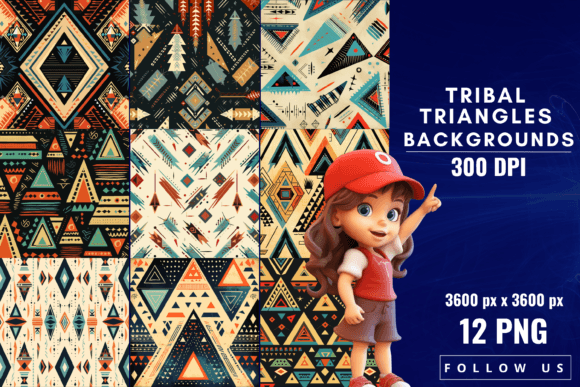
Tribal Triangles Backgrounds: Geometric Heritage for Modern Design
Understanding the Visual Language of Tribal Triangles
Tribal Triangles Backgrounds offer more than just a pattern; they provide a visual language rooted in cultural symbolism and geometric precision. The design is characterized by an intricate network of interconnected triangles, each line carefully placed to create depth, movement, and a sense of ancient heritage. This isn't a chaotic scatter of shapes. Instead, it's a deliberate composition that balances repetition with variation, resulting in a background that feels both structured and organic. The visual personality is bold yet sophisticated, carrying an earthy authenticity that can ground a design while adding significant visual interest.
The appeal lies in its versatility across different creative contexts. For a designer working on a brand identity for a sustainable clothing line or an artisan coffee shop, these backgrounds can establish a foundational layer of texture and story. The geometric nature provides a modern edge, while the tribal inspiration connects to themes of craftsmanship, tradition, and community. It’s a design asset that doesn’t scream for attention but rather supports and elevates the primary content, adding a layer of subconscious depth that audiences can feel even if they don’t immediately analyze the pattern.
Practical Applications: Where This Background Truly Shines
The true value of a design asset like Tribal Triangles Backgrounds is measured in its real-world application. Its strength is in projects where atmosphere and brand perception are key. Consider using it for:
- Brand Identity & Packaging: For brands in the wellness, outdoor, or handmade goods sectors, this background can be used on packaging sleeves, business card backs, or website hero sections. It communicates authenticity and a connection to something larger than mass production.
- Editorial & Publishing: In magazine layouts, book chapter dividers, or blog headers, the pattern creates a strong visual break and thematic anchor. It works particularly well for features on travel, culture, design history, or artisan profiles.
- Digital & Social Media: As a background for Instagram stories, podcast artwork, or webinar slides, it adds immediate visual weight and professionalism. The high-resolution detail ensures it looks crisp on screens of all sizes, avoiding the pixelation that can undermine credibility.
- Event & Marketing Collateral: From festival posters to workshop flyers, the background sets a distinct mood. It can make a simple white-text layout appear intentional and designed, saving time while boosting impact.
A practical tip: test the background with your primary typeface. A clean sans-serif font often pairs beautifully, letting the geometric complexity of the background stand out without competing. Alternatively, a sturdy serif font can enhance the traditional feel. The key is contrast in weight and simplicity.
Making It Work: Selection, Pairing, and Readability
Choosing any design asset requires a critical eye. First, evaluate the specific project’s needs. Does the brand or publication have a story that aligns with themes of heritage, geometry, or cultural richness? If the project is ultra-modern and minimalist, the background might need to be used very subtly, perhaps as a faint texture behind a solid color overlay. Always consider the commercial licensing included with the file to ensure it fits your intended use, whether for a personal blog or a client’s product line.
Next, focus on font pairing and readability. The intricate pattern of Tribal Triangles Backgrounds means any text placed over it must have sufficient contrast and size. This is not the place for a delicate script font or a highly stylized handwritten font at small sizes. Instead, opt for a display font with strong letterforms for headlines, or a modern typography choice with good x-height for body copy. Always conduct a readability test at the actual size it will be used. A simple technique is to place a semi-transparent solid shape or a gradient overlay behind the text area to guarantee clarity.
Finally, think about visual hierarchy. The background should support, not dominate. Use it in areas where it can breathe—full-bleed sections, large panels, or as a repeated element in a system. Pair it with solid, complementary colors from the background’s palette for text and accent elements. This approach maintains brand consistency and ensures the design feels cohesive rather than overwhelming. By treating the Tribal Triangles Background as a foundational design layer rather than a mere decoration, you unlock its potential to add meaningful depth and a distinct sense of place to your creative work.